• Skip to primary navigation
  • Skip to main content
  • Skip to primary sidebar
Curious, Healing

Curious, Healing

Books about healing, business, and fun

  • About Sonia Connolly

psychology

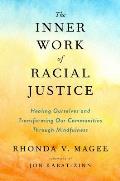
“The Inner Work of Racial Justice” by Rhonda V. Magee

August 28, 2020 by Sonia Connolly 2 Comments

book cover

Subtitle: Healing Ourselves and Transforming Our Communities Through Mindfulness

Rhonda V. Magee is a Black woman law professor at the University of San Francisco. She has studied mindfulness in depth, and uses it to get through difficult conversations about race with students as well as live with ever-present microaggressions. She teaches mindfulness to help people pause before reacting, increase inner tolerance for strong emotions, and to stay connected with themselves and others.

The first half of the book very gently and slowly encourages the reader to admit that racism exists and might be part of their lives. This is the opposite of Layla Saad’s direct approach in Me and White Supremacy. I can see that different approaches work well for different people.

The strongest message of the book is that we need to stay in mindful, non-violent conversation with each other (and ourselves) about race. Not until the last chapter does she add a caveat about retreating from people who threaten violence. I would add a second caveat about people who are simply not listening or engaging in good faith. Most of her examples include students or workshop participants who have chosen to learn from her, or community members who have an existing motivation to stay connected.

With the addition of those caveats, I agree that we are all in the racist soup together, each learning at our own pace, and we can do our best to be kind to people who are not as knowledgeable as we are, just as more knowledgeable people continue to be kind to us. I wanted to see more about reaching one’s limits and reacting with anger and frustration. There is a place for that, as well as a lot of good work to be done in the world with mindful listening.

Highly recommended for people who are new to anti-racist work, or new to meditation, but not both. I think it would be difficult to learn both from a book at the same time. I have some experience with both and the pace felt slow, but I still got a lot from the book.

Meditations and articles at Rhonda V. Magee’s website

Available at bookshop.org.

Filed Under: nonfiction Tagged With: anti-racism, communication, memoir, psychology

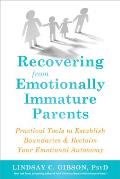
“Recovering from Emotionally Immature Parents” by Lindsay C. Gibson, PsyD

February 27, 2020 by Sonia Connolly 1 Comment

book cover

Subtitle: Practical Tools to Establish Boundaries & Reclaim Your Emotional Autonomy

Recommended to me by: Reading Lindsay Gibson’s previous book

This book repeats some material on emotionally immature parents from the previous book Adult Children of Emotionally Immature Parents, in a way that is more focused on how the adult child feels rather than focusing on the parents. It develops more material on how to resist emotional takeovers and how to develop a more functional relationship with emotionally immature parents in adulthood.

The premise is to be sure of your own value, and relate from that place, rather than hoping the parents will recognize and nurture your value. There are some good detailed suggestions for how to build a trusting relationship with yourself. The process could take a long time, even with therapeutic support.

There were occasional mentions of creating more distance from emotionally immature parents, but for the most part this book focuses on staying in relationship. I would have liked to see more about danger signs that indicate it’s better to stay far away.

I’ve been mentioning this book to lots of clients. Recommended for great analysis and ideas for how to regain autonomy and heal from immature parenting.

Available at bookshop.org.

Filed Under: nonfiction Tagged With: childhood abuse, communication, healing, psychology, trauma

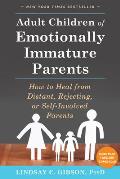
“Adult Children of Emotionally Immature Parents” by Lindsay C. Gibson, PsyD

November 27, 2019 by Sonia Connolly 2 Comments

book cover

Subtitle: How to Heal from Distant, Rejecting, or Self-Involved Parents

Lindsay Gibson tells it like it is. There is a lot of clear analysis of the ramifications of dealing with emotionally immature parents, without any waffling about, “Maybe the kid is the problem after all.” Emotionally immature parents are held responsible for falling down on the job.

“Emotionally immature parents fear genuine emotion and pull back from emotional closeness. They use coping mechanisms that resist reality rather than dealing with it. They don’t welcome self-reflection, so they rarely accept blame or apologize.”

“Understanding their emotional immaturity frees us from emotional loneliness as we realize their neglect wasn’t about us, but about them. When we see why they can’t be different, we can finally be free of our frustration with them, as well as our doubts about our own lovability.”

“If they don’t make a solid emotional connection with their child, the child will have a gaping hole where true security might have been.”

Two chapters cover characteristics of emotionally immature people in themselves and as parents. There are some interesting insights here, for example, “They have an inconsistent sense of time,” which leads to issues with accountability, responsibility, and planning. At the same time these chapters feel harsh and angry, very much “them” vs. “us.” Since we all behave in emotionally immature ways at times no matter how hard we try to be considerate, it makes for uncomfortable reading.

The book later notes that we naturally respond with anger at an attachment figure who is non-responsive or abandoning.

Four types of emotionally immature parents are described: Emotional/anxious, driven/perfectionist, passive/avoidant, rejecting/mean. These types are not revisited in later chapters.

Children of emotionally immature parents create healing fantasies about what will finally let them receive the connection, nurturing, and emotional responsiveness they crave. They also create a role-self which is their best effort to get what they need from difficult parents, rather than living as their true self.

Children of emotionally immature parents tend to be either internalizers or externalizers (locus of control, but without using that phrase). There is some lip service here to people combining both styles and balance being the goal, and at the same time a clear preference for internalizers as being more emotionally mature and capable of growth.

To heal, release self-defeating roles, for example being small and self-effacing in an effort to elicit a caring response. Acknowledge true thoughts, feelings, and opinions, whether or not you choose to share them with parents or others.

As an adult, avoid getting hooked by an emotionally immature parent through detached observation and maturity awareness (estimating people’s probable level of emotional maturity). If someone is showing signs of being emotionally immature:

  1. Express boundaries, feelings, etc. and then let it go
  2. Focus on the outcome, not the relationship
  3. Manage the relationship rather than engaging.

Emotionally immature parents may feel safer and respond better to this more distant approach – or not. It is still calmer and emotionally safer for the adult child to alter their expectations to better match the parent’s capacity and skills.

The books answers objections people may have to the maturity awareness approach, and then details how it feels to be in relationship with an emotionally mature person.

In this book’s example stories, on the positive side, the men and women seem like real people, not gendered stereotypes. In the second half of the book, there is some variety of names that includes different cultures. On the negative side, as far as I could tell, there were no same-sex couples nor trans nor non-binary people.

Lindsay Gibson clearly brings a wealth of thought, research, and experience to this book. There is a lot of great information here, and at the same time it can be uncomfortable to read. Recommended.

The publisher New Harbinger has a download available of all the exercises in the book (pdf) which give you a great summary of the content as well.

Available at bookshop.org.

Filed Under: nonfiction Tagged With: childhood abuse, communication, healing, psychology, relationship, trauma

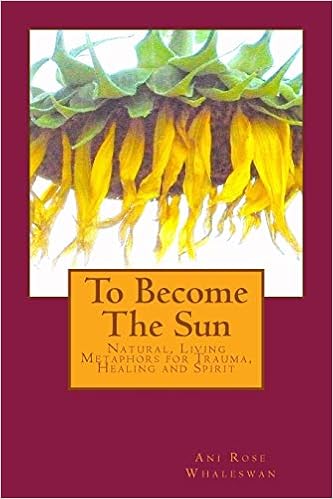
“To Become the Sun” by Ani Rose Whaleswan

July 30, 2019 by Sonia Connolly Leave a Comment

book cover

Subtitle: Natural, Living Metaphors for Truama, Healing and Spirit

Recommended to me by: Ani Rose Whaleswan. I’ve known the author for a long time online, and I contributed an essay to her collection We Have Come Far.

A lyrical, grounded, wise, hopeful book that shares Ani Rose Whaleswan’s connection to nature and positive metaphors for healing.

Each chapter explores a metaphor in depth and ends with questions to think about and a note about non-violence. The metaphors are: Mountain, Pearl, Unfolding Flowers, Stones, Compost, Hummingbird, Wave, Embers, and Shadow. The book is about healing rather than trauma, and while it discusses some of the effects of trauma, it does not have explicit traumatic material.

There are also a lot of quotes and references to other wise people’s work, including one of my favorites from Zora Neale Hurston’s “Their Eyes Were Watching God” (see below). Unfortunately the quote is (presumably accidentally) misattributed to a white man. The book is double spaced and has not been professionally edited.

Highly recommended for new ways to think about the process of healing from profound trauma.

I first encountered this quote on the English AP exam and loved it so much I made sure to remember the author and title to find it later, even in the middle of taking the exam.

When god had made (the man) he made him all out of stuff that sung all the time and glittered all over. Some angels got jealous and chopped him into a million pieces, but still he glittered and hummed. So they beat him down to nothing but sparks but each little spark had a shine and a song. So they covered each one with mud. And the lonesomeness in the sparks made them hunt for one another.—Zora Neale Hurston, “Their Eyes Were Watching God”

Available at Amazon.

Filed Under: nonfiction Tagged With: healing, memoir, psychology, trauma

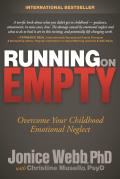
“Running on Empty” by Jonice Webb, PhD

April 16, 2019 by Sonia Connolly 1 Comment

book cover

Subtitle: Overcome Your Childhood Emotional Neglect

Emotional neglect is the whitespace between parental actions, what didn’t happen rather than what did happen. Lack of emotional connection, not paying attention, and not responding competently to the child’s emotional needs. The parent sees the child as an extension of themselves, a possession, or a burden, rather than a separate person.

The book describes twelve kinds of emotionally neglectful parents, with brief vignettes. The twelfth kind is the most common, “Well Meaning But Emotionally Neglected Themselves” parents.

Some effects of emotional neglect:

Some effects of emotional neglect are

  1. Feelings of Emptiness
  2. Counter-dependence (not depending on anyone)
  3. Unrealistic Self-Appraisal (not being mirrored by parents, lack of self-understanding)
  4. No Compassion for Self, Plenty for Others
  5. Guilt and Shame; What is Wrong with Me?
  6. Self-Directed Anger, Self-Blame
  7. The Fatal Flaw (If People Really Know Me They Won’t Like Me)
  8. Difficulty Nurturing Self and Others
  9. Poor Self-Discipline
  10. Alexithymia: Poor Awareness and Understanding of Emotions

There is also a brief, respectful chapter on suicidal feelings.

The second part of the book is “Filling the Tank.” It starts by talking about how change happens, gradually, with some setbacks, requiring ongoing persistence to move through avoidance and discomfort.

The sections on how to fill in missing parenting by acquiring new habits are trying to be helpful, but they feel glib and superficial. “Keep practicing these skills you never learned, you’ll get there eventually!” Topics include boundaries, emotional fluency, self-care, diet and exercise, and kind self-talk.

In the brief section on relationships, there is a useful tip on horizontal and vertical questioning. Horizontal questions ask for information and can be answered quickly. Vertical questions ask the person to turn inward to find and share understanding.

The chapter on parenting encourages stepping away from guilt and filling up yourself to be able to fill up your child.

The final chapter, for therapists, felt more helpful. Here is how to really help someone who was emotionally neglected, by providing what they missed out on, rather than the previous chapters that seem to say, “Figure this out for yourself.”

It is important to name and recognize Emotional Neglect in ourselves and others. The ideas in this book are groundbreaking and crucial. The self-help format does not quite work, but it is still worth reading. It reminds me of The Emotionally Absent Mother by Jasmin Lee Cori, which covers related ground with more focus on understanding what was missing and less focus on self-help.

Available at bookshop.org.

Filed Under: nonfiction Tagged With: healing, psychology, trauma

“Stop Caretaking the Borderline or Narcissist” by Margalis Fjelstad, Phd

March 23, 2019 by Sonia Connolly Leave a Comment

book cover

Subtitle: How to End the Drama and Get on with Life

Recommended to me by: a client

A clear analysis and set of tools for bringing your energy back to yourself when you have been wrapped up in caretaking someone who is volatile and focused on themselves. In the book, persistently difficult people are labeled as narcissists or borderlines, or BP/NP for short. I have hesitations about casually throwing around psychological diagnoses and prefer to focus on problematic behaviors, such as the inability to see others’ point of view.

Accept that the difficult person will not suddenly become empathic and considerate. Move out of the drama triangle (persecutor, rescuer, victim) into the caring triangle (assertiveness and doing, caring and choice, acceptance and self-responsibility). I like having a clear alternative to the drama triangle. Practice saying no, disengaging from arguments, and saying what you want. Take concrete actions to make your life better, possibly including ending or severely curtailing the relationship.

Recommended for anyone fed up with the caretaker role in relationships with persistently difficult people.

Available at bookshop.org.

Filed Under: nonfiction Tagged With: psychology, relationship

  • « Go to Previous Page
  • Page 1
  • Interim pages omitted …
  • Page 3
  • Page 4
  • Page 5
  • Page 6
  • Page 7
  • Interim pages omitted …
  • Page 22
  • Go to Next Page »

Primary Sidebar

Recent Books

  • “We Belong to the Drum” by Sandra Lamouche and Azby Whitecalf
  • “Atlas of the Heart” by Brene Brown
  • “Life After Cars” by Sarah Goodyear, Doug Gordon, Aaron Naparstek
  • “Tidy First?” by Kent Beck
  • “When You Had Power” and “You Knew the Price” by Susan Kaye Quinn
  • “Taproot” by Keezy Young
  • “The Tower at Stony Wood” by Patricia A McKillip
  • “Hospicing Modernity” by Vanessa Machado de Oliveira
  • “How We Show Up” by Mia Birdsong
  • “The Enchanted Greenhouse” by Sarah Beth Durst

Tags

activism aging anti-racism bodywork business childhood abuse childrens CivicTech communication disability domestic violence fantasy feminism finance Focusing food fun healing health at any size illustrated Judaism leadership lgbt marketing memoir music natural world neurodiversity politics psychology relationship romance science science fiction software spirituality survival story trauma writing young adult

Categories

Archives

Please note: bookshop.org and Amazon links are affiliate links. Copyright © 2026 · Genesis Sample on · WordPress