• Skip to primary navigation
  • Skip to main content
  • Skip to primary sidebar
Curious, Healing

Curious, Healing

Books about healing, business, and fun

  • About Sonia Connolly

healing

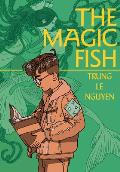
“The Magic Fish” by Trung Le Nguyen

December 5, 2021 by Sonia Connolly Leave a Comment

book cover

Recommended to me by: Soph

What a lovely, powerful graphic novel. Tien is growing up in the US with Vietnamese immigrant parents. He speaks mostly English, and they speak mostly Vietnamese. It’s a close, loving family and they read fairy tales together when they have time. The graphic novel interweaves slant-wise takes on three familiar fairy tales with Tien’s adventures in high school and as he struggles to communicate important truths about himself to his parents.

The art is gorgeous. Fairy tale dresses are especially elaborate, and the end of the book contains notes on the time periods the dresses are drawn from. The one thing I found confusing is that something about the proportions of the characters made them look younger to me. Tien looked like a much younger child, and his mom looked like his teen older sister, even though the story communicates that Tien is in high school and his mom is in her 30s.

The love in the book makes me cry, along with the difficult times around immigration and grief, conveyed with kindness. Highly recommended!

Content notes: brief homophobia, not endorsed by the author, and fairy tale violence.
Available at bookshop.org.

Filed Under: art, fiction Tagged With: childrens, fantasy, fun, healing, illustrated, lgbt, relationship, young adult

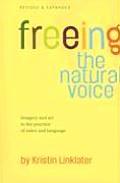
“freeing the natural voice” by Kristin Linklater

September 12, 2021 by Sonia Connolly Leave a Comment

book cover

Subtitle: Imagery and art in the practice of voice and language

Recommended to me by: Nadia Tarnawsky

This book is aimed at actors, but also has useful information for singers, although the one aside about Bulgarian singing does not match what I have learned about that art. And that leads to my summary of the whole book, which is that it is very detailed and knowledgeable within its scope, but does not acknowledge lack of expertise in neighboring realms.

There are many exercises to get in touch with the anatomy of the breath and voice in the whole body, and to release inhibitions that get in the way of free breath and voice.

The only explanation offered for inhibitions is “The young child desperately wanted a cookie and was required to ask in a nice voice, so had to separate voice from emotion.” There is no mention of physical violence, sexual abuse, or neglect that would cause a person to separate voice and emotion.

There is no awareness that reconnection needs to go slowly, with support, and that “resistance” is a clear message to slow down even more. There is one brief mention half-way through the book about working with “light” emotions in the exercises because “dark” emotions might require more support. I wonder how many of the author’s students had overwhelming reactions to these exercises.

Similarly, there is no mention of physical injuries or disabilities that might get in the way of doing these exercises, and no offered accommodations or workarounds.

I appreciate the idea of inviting a sigh of relief, and then observing with the breath and voice do with that. Rather than trying to control the breath and voice, we can allow the body to respond to what we experience and want to express.

The book could benefit from anatomical drawings, since it is based in very specific and detailed anatomy that is only described in text. There are cartoon-like line drawings showing people doing some of the exercises.

Recommended for people interested in the details of embodied voice, with the above caveats.

Available at bookshop.org.

Filed Under: nonfiction Tagged With: bodywork, communication, healing, illustrated, music

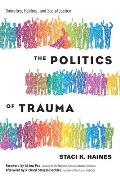
“The Politics of Trauma” by Staci K. Haines

December 26, 2020 by Sonia Connolly Leave a Comment

book cover

Subtitle: Somatics, Healing, and Social Justice

Recommended to me by: Darryl C.

This book rang true to me from beginning to end. Staci Haines combines embodied trauma work with social justice, and everything she says fits with what I already know and takes it further.

Many healing modalities view trauma and abuse as individual problems. Instead, Haines puts trauma and abuse in the context of our abusive social structures that put individuals in harm’s way. White supremacy, patriarchy, capitalism, and environmental destruction divide us from one another and keep us from learning the skills we need to treat each other with care. They keep us divided from ourselves as we try to heal.

Safety, belonging, and dignity are core needs that should be met together for everyone. Traumatic and abusive situations put one in conflict with another – we can choose either safety or dignity, either dignity or belonging. Our bodies deeply learn traumatized ways of responding to the world.

We can form declarations and commitments: statements about our core beliefs and goals that guide our healing. For example, “I am a commitment to be in my skin without apology.” (Lisa Thomas-Adeyemo) We can discover what commitments and declarations we have unconsciously adopted or had imposed upon us. Declarations can be personal or community-oriented or both.

We can find what supports us and practice resilience, reminding ourselves to come out of trauma mode. Social justice organizations can also collectively practice resilience. We can rebuild safety and trust at the embodied, physical level. We can relearn boundaries and requests.

To help someone heal, we blend with the patterns that are already true for them, and help them notice what the pattern has been taking care of for them. As the body is supported and honored, the underlying physical and emotional memories and holding patterns can be released. We can help someone feel allied with, exactly as their body needs to feel it.

For example, make a fist with one hand. With the other hand, try to pry it open. How does that feel? Instead, let your other hand support the fist with curiosity and kindness. How does that feel? What happens with your fist? With the rest of your body?

Trauma is held in the body through bands of tension, or absent slackness. A healthy body has relaxed presence. Somatic opening is encouraged by blending with what is there and allowing it to release and transform. While emotions often arise during a release, cathartic emotion is not the goal.

We can discern what shame is ours and what belongs to others. We can blend with shame, hearing its messages, and look underneath to what it is hiding or protecting. Often shame is preferable to feeling powerless, helpless, or abandoned. We can learn to take centered accountability rather than being over- or under-accountable for our actions. We can sit with the complex questions around our responsibilities. We can learn about forgiveness of others and self-forgiveness. “Even if … [shameful act or belief], I am forgivable.”

We can learn to be present with ourselves and with others at the same time. We can learn to hold contradictions and conflict. We can learn how to have generative rather than destructive conflicts.

Personal healing and social justice organizing can support and serve each other.

I loved this quote at the beginning.

The Church says: The body is a sin.
Science says: The body is a machine.
Advertising says: The body is a business.
The body says: I am a fiesta.
—Eduardo Galeano, from “Window on the Body”

In the original Spanish:

La Iglesia dice: El cuerpo es una culpa.
La ciencia dice: El cuerpo es una máquina.
La publicidad dice: El cuerpo es un negocio.
El cuerpo dice: Yo soy una fiesta.

Highly recommended for activists and healers!

Available at bookshop.org.

Filed Under: nonfiction Tagged With: activism, anti-racism, bodywork, domestic violence, feminism, healing, politics, psychology, trauma

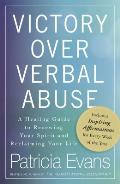
“Victory Over Verbal Abuse” by Patricia Evans

October 31, 2020 by Sonia Connolly 1 Comment

book cover

Subtitle: A Healing Guide to Renewing Your Spirit and Reclaiming Your Life

Recommended to me by: Reading Patricia Evans’ earlier books about verbal abuse many years ago

Patricia Evans named the severity and prevalence of verbal abuse and offers validation and healing for survivors. Her earlier books “The Verbally Abusive Relationship” and “Verbal Abuse Survivors Speak Out” focus on describing verbal abuse and coping with it. This book focuses on healing from the aftermath once the abuse is over. She recommends no contact with abusers.

She states clearly and repeatedly that verbal abuse is not the survivor’s fault. The abuser has projected their self into their victim and is not recognizing the victim as a separate person. Healing involves recognizing that and rebuilding one’s self.

The book includes a summary of what verbal abuse is, including survivor stories, brief descriptions of trauma healing modalities, and a set of 52 affirmations such as “I am confident even as I confront the unknown,” with a page or two of accompanying text.

The trauma healing modality called “Healing the Spirit” had some victim-blaming quotes, but the rest of the book is wonderfully free of that.

Recommended if you are in the process of healing from verbal abuse and would like an understanding guide.

Patricia Evans’ website.

Available at bookshop.org.

Filed Under: nonfiction Tagged With: domestic violence, healing, psychology, relationship, trauma

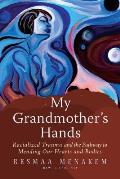
“My Grandmother’s Hands” by Resmaa Menakem

September 30, 2020 by Sonia Connolly Leave a Comment

book cover

Subtitle: Racialized Trauma and the Pathway to Mending Our Hearts and Bodies

Recommended to me by: Naomi Ardea

Resmaa Menakem is a Black psychotherapist and teacher. He addresses the ways white supremacy, which he calls white body supremacy, is perpetuated through trauma in Black, white, and police bodies. He says we each have to learn to settle our bodies, individually and collectively. He distinguishes the clean pain of addressing and healing trauma from the dirty pain of avoiding it.

I appreciate the insights and settling practices in this book. African-Americans have a history of trauma from slavery, as well as the day-to-day trauma and stress of racism. White people also had a history of trauma before colonizing the Americas. This trauma is passed down the generations through epigenetics and patterns of traumatizing behavior. He brings up the trauma of inflicting or witnessing violence, which afflicts police bodies.

He says white bodies and police bodies reflexively feel threatened by Black bodies. He talks about police saying they “couldn’t help it” and “feared for their lives” when talking about shooting and killing unarmed Black people, often in the back. He adds “annihilate” to “fight, flight, or freeze,” but never discusses it directly as a trauma or nervous system response.

He asserts that white bodies have generational trauma from historical conflicts in Europe. He does not address the trauma of immigration itself, abandoning all that is known for a wholly unfamiliar place, leaving behind family and social connections. In addition, his emphasis on generational trauma elides individual present-time trauma, letting individuals off the hook.

There are some metaphors and simplifications that don’t work for me. Calling the vagus nerve the “soul nerve.” Saying it causes or holds emotions that are held in the whole body. Saying that it is responsible for activation responses in the body, when those are caused by the sympathetic nervous system. Saying it makes us human. No, reptiles and mammals have vagus nerves.

Most of the suggested exercises in the book are intended to settle the body, or to mindfully and gently address an activating memory. And then, on page 199 of the hardcover edition, at the beginning of the chapter on Mending the White Heart and Body, a sickening, violent act is described with the specific invitation to put yourself in the scene. It is not even marked as an exercise in the same way as the other exercises, and there is no content warning.

I had a teacher in a massage class once who similarly ended a guided meditation in a shocking way. I think some people imagine that they need to show people what trauma feels like, when many of us have plenty of experience with it already. I am disappointed that the book was published with this mistaken assumption included.

The final chapters contain concrete advice for creating cohesive and resilient social justice groups and events.

Overall, this is an important book with important ideas. It takes a step forward into addressing the trauma of slavery, racism, policing, and white supremacy.

Available at bookshop.org.

Filed Under: nonfiction Tagged With: anti-racism, healing, psychology, trauma

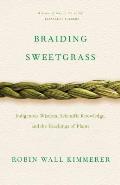
“Braiding Sweetgrass” by Robin Wall Kimmerer

May 6, 2020 by Sonia Connolly 1 Comment

book cover

Subtitle: Indigenous Wisdom, Scientific Knowledge and the Teachings of Plants

Recommended to me by: Amy Bennett

A set of essays loosely tied together in chronological order, with themes of sweetgrass and braiding all the way through. Each essay braids together personal memoir, Native American (specifically Potawatomi) ways of living, and colonialist ways of living.

Potawatomi ways developed over generations as people saw what works to live in balance with nature, as a part of nature. Humans are considered the young ones, the newcomers, learning from their more experienced plant and animal family members.

Sweetgrass is harvested in specific ways. Not the first plant you find, because that might be the only one. Take only what you need, up to half of the plants there, either by cutting half of each bunch, or taking whole bunches. Robin Wall Kimmerer is a Professor of Botany, and one of her PhD students showed in a set of careful experiments that sweetgrass thrives when harvested this way, and fails to propagate if it is left completely unharvested. Humans and sweetgrass have a cooperative, collaborative partnership.

White colonialists disastrously interrupted Native American ways of living by stealing Native Americans’ lands and pushing them into entirely different ecosystems, and by taking their children to residential schools and forcibly preventing them from speaking their own languages or practicing their spirituality. The Potawatomi people and other tribes are gathering together the fragments of what remains, and braiding them together anew.

The book ends on a hopeful note, that perhaps enough of us will turn toward collaborative, cooperative ways of living that we will not entirely destroy the ecosystems of this green earth. Fitting right in with that hope, the current Great Pause of this pandemic gives us time to consider what we want to add back in to our lives, and what we want to leave behind to allow cleaner skies, safer streets, and more sustainable lives.

I read this as an ebook, because that’s what I can get from the library in this time of pandemic. It’s an odd way to read a book so rooted in physical experience, and I would have much preferred to have a physical book in my hands. This is a long book that wants to be appreciated slowly, essay by essay, section by section, exploring how all the parts fit together to support each other.

Highly recommended!

Robin Wall Kimmerer: ‘People can’t understand the world as a gift unless someone shows them how’ interview by James Yeh, May 23, 2020

Available at bookshop.org.

Filed Under: nonfiction Tagged With: activism, food, healing, memoir, natural world, politics, science, spirituality

  • « Go to Previous Page
  • Page 1
  • Page 2
  • Page 3
  • Page 4
  • Interim pages omitted …
  • Page 17
  • Go to Next Page »

Primary Sidebar

Recent Books

  • “How We Show Up” by Mia Birdsong
  • “The Enchanted Greenhouse” by Sarah Beth Durst
  • “What It Takes to Heal” by Prentis Hemphill
  • Kitchens of Hope by Linda S. Svitak and Christin Jaye Eaton with Lee Svitak Dean
  • “Very Far Away From Anywhere Else” by Ursula K Le Guin
  • “Seaward” by Susan Cooper
  • “Surviving Domestic Violence” by Elaine Weiss
  • “The Book of Love” by Kelly Link
  • “Alexandra’s Riddle” by Elisa Keyston
  • “Weaving Hope” by Celia Lake

Tags

activism aging anti-racism bodywork business childhood abuse childrens CivicTech communication disability domestic violence fantasy feminism finance Focusing food fun healing health at any size illustrated Judaism leadership lgbt marketing memoir music natural world neurodiversity politics psychology relationship romance science science fiction software spirituality survival story trauma writing young adult

Categories

Archives

Please note: bookshop.org and Amazon links are affiliate links. Copyright © 2026 · Genesis Sample on · WordPress