• Skip to primary navigation
  • Skip to main content
  • Skip to primary sidebar
Curious, Healing

Curious, Healing

Books about healing, business, and fun

  • About Sonia Connolly

trauma

“Saber es Poder” by Maxine Harris, Fabiana Wallis, Hortensia Amaro

September 2, 2012 by Sonia Connolly 2 Comments

Subtitle: Modelo de Trauma y Recuperación para Mujeres Latinas

Translation: Knowledge is Power: Model of Trauma and Recovery for Latina Women

Recommended to me by: Fabiana Wallis’ bio at Conexiones

This book is a curriculum for a 25-session trauma recovery support group for Latina women. Since I hope to work with Conexiones Center for Trauma Recovery as a practitioner, my goal was to refresh my Spanish language skills and learn the vocabulary associated with trauma and recovery. It served that goal well.

The book also included specific information about Latino/a culture and issues for immigrants.

I read this book as both a practitioner helping people recover from trauma, and as a daughter of immigrants from Latin America who experienced trauma. I fit the target reader in some ways and not in others, especially since the book assumes a sharp separation between facilitators and group members.

The information was very basic, aimed at group participants who had never thought about trauma and its connection to present behaviors. There was recurring emphasis on the issues of drug use, prostitution, and unprotected sex. There was no discussion of the mechanisms of PTSD in the body.

In the various units, I saw identification of the damage wrought by trauma, but less help in building new skills than I expected. I imagine a woman reaching the end of the support group and thinking, “Now what?!” At the same time, I imagine that the opportunity to speak about past trauma and receive support would be healing in itself.

When used by knowledgeable and compassionate group facilitators, I think this book would form the basis for a useful, culturally aware support group for Latina survivors of abuse.

Filed Under: nonfiction Tagged With: anti-racism, domestic violence, feminism, psychology, trauma

“Poppies on the Rubbish Heap” by Madge Bray

September 1, 2012 by Sonia Connolly Leave a Comment

Subtitle: Sexual Abuse, The Child’s Voice

Madge Bray shares her journey as a child advocate social worker, along with several abused children’s case histories. Woven through the book is the history of recognition and backlash around the sexual abuse of children. Madge Bray pioneered the use of toys and play therapy to elicit children’s stories and help them heal.

The toys include anatomically correct dolls, angry puppets, and a battery-operated rabbit that trembles silently. Madge Bray offers a neutral, welcoming space for the children to interact with the toys and find self-expression. She enters into their world rather than demanding that they communicate in adult ways.

The book is intense and riveting. It tells of catastrophic abuse from the wounded child’s perspective, as the child is heard and helped. It tells of victorious court battles as well as one story about a child whose parents withdrew him from therapy before he could tell his story.

Recommended as a look into social work with children in England, the realities of child sexual abuse, and the healing power of deep listening.

Available at bookshop.org.

Filed Under: nonfiction Tagged With: childhood abuse, domestic violence, healing, memoir, psychology, trauma

“Unlimited…” by Ani Rose Whaleswan

June 30, 2012 by Sonia Connolly Leave a Comment

This is a book of 18 poems and 13 paintings about Ani Rose Whaleswan’s healing from extreme abuse. From the back cover: “She believes too that art is healing, and healing is an art.”

The paintings are colorful, vivid, powerful. Each one is accompanied by a paragraph of background or interpretation.

The poems are concrete, metaphorical, full of truth and clarity.

“Life is abundant in the soft places
The broken spaces between hard things.”

Recommended as a window into individual and universal healing.

Available at CreateSpace.

Filed Under: poetry Tagged With: childhood abuse, illustrated, spirituality, trauma

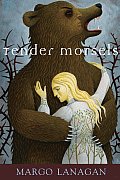
“Tender Morsels” by Margo Lanagan

May 3, 2012 by Sonia Connolly Leave a Comment

Recommended to me by: Meloukhia

This is a fairy tale, but no child’s story. It starts with incest and pregnancy and abortion, and continues with gang rape. Then Liga is magically placed in a world that matches her heart’s desire, peaceful and safe.

While examining the consequences of assault and the consequences of avoiding trauma, the story sings along, full of prickly, kind characters and vivid details.

Recommended, for a true look at life in fairy tale guise.

An interview with Margo Lanagan.

Jody Hewgill (the cover artist)’s portfolio.

Available at bookshop.org.

Filed Under: fiction Tagged With: childhood abuse, domestic violence, survival story, trauma, young adult

“The Myth of Sanity” by Martha Stout, Ph.D.

April 3, 2012 by Sonia Connolly Leave a Comment

Subtitle: Divided Consciousness and the Promise of Awareness; Tales of Multiple Personality in Everyday Life

Recommended to me by: a client

This book contains a therapist’s compassionate, engaging views on people who have Dissociative Identity Disorder (previously known as Multiple Personality Disorder) and how they can heal. Martha Stout discusses both specific cases and general themes of survival, courage, integrity, and the process of healing.

After trauma, she says the core question is, “Shall I choose to die, or shall I choose to live?” Those who choose to live, live fully, passionately. Anything less would not be worth the struggle and pain of healing.

Healing requires going back and revisiting traumatic memories while the whole nervous system shouts, “No! Danger!” They don’t all have to be revisited, and perfect recall is not required, but at least a few frozen traumatic memories have to be transformed into narrative memory.

The key predictor of healing is a sense of responsibility for one’s actions. Conversely, prioritizing self-protection above responsibility acts to keep dissociative mechanisms in place. A sense of integrity, or the lack of it, shines through all the dissociative fragments of a person.

We see dramatic portrayals of Dissociative Identity Disorder in books and movies and believe it to be very rare, but most people with DID switch quietly, unnoticed, in higher numbers than we believe. Martha Stout says it is because most people aren’t such good actors, and I think people also try to camouflage switching as much as possible. She validates the anger, frustration, and bewilderment of coping with someone’s quicksilver changes and lack of memory for their own recent words and actions.

She also says that we all dissociate to some extent, whether arriving at a destination without remembering the drive, or being absorbed in a movie, or suppressing “inconvenient” emotions.

For trauma survivors she recommends:

  • Find help, a steady witness, whether a therapist or a friend.
  • Be as safe as possible in the present. Provide your nervous system with a calm environment.
  • Buy comforts, keep a pet, fall in love with silence.
  • Separate yourself from difficult, crisis-addicted, rageful, and violent people.
  • Have routines. Make them sacred. Sleep every night.
  • Meditate.
  • Keep a journal. Note your dreams.

This book is unreservedly recommended!

Available at bookshop.org.

Filed Under: nonfiction Tagged With: childhood abuse, healing, psychology, trauma

“Alchemy of Illness” by Kat Duff

March 24, 2012 by Sonia Connolly Leave a Comment

Subtitle: A woman explores the transforming – and, paradoxically, healing – experience of being ill

Recommended to me by: a client

Alchemists strive to turn lead into gold by heating it alone in a sealed container, a crucible. In the crucible of Chronic Fatigue Syndrome, Kat Duff turned inward and found healing in the stillness and isolation forced by her illness.

Weaving together symptoms, dreams, mythology, Jungian psychology, and alchemy along with anthropological research into illness and healing, Duff reveals new perspectives on illness. Instead of being an assault or a punishment, illness can be a natural consequence of our history as individuals and communities. She sees her illness as an agent of healing both for sexual abuse she suffered as an infant, and for the land theft her forebears committed against the Sioux tribe in Minnesota.

Duff is careful to avoid the painful idea that “sick people are personally responsible for creating their illnesses through some kind of wrong-thinking or wrong-doing.” Sickness isn’t bad. It just is.

She relates a story about Nan Shin, a Zen nun diagnosed with cancer and struggling with guilt and remorse.

Then an old friend, who was also a Zen student, visited. He threw his arm around her shoulders and wisecracked, “Good Karma, huh? Brings you close to the Way.” Shin wrote later, “The jolt I felt then showed me very clearly that I had been thinking, Bad Karma. Within a fraction of a second the molecules turned themselves round and reorganized. I am flatly grateful to him forever.”

Unfortunately, Duff conflates illness with disability, and occasionally uses phrases like “confined to a wheelchair.” People are not confined by wheelchairs any more than people are confined by bicycles, cars, or any other device that assists mobility.

I recommend this book for its kaleidoscope of new perspectives about illness.

Available at bookshop.org.

Filed Under: nonfiction Tagged With: disability, memoir, spirituality, survival story, trauma

  • « Go to Previous Page
  • Page 1
  • Interim pages omitted …
  • Page 6
  • Page 7
  • Page 8
  • Page 9
  • Page 10
  • Page 11
  • Go to Next Page »

Primary Sidebar

Recent Books

  • “How We Show Up” by Mia Birdsong
  • “The Enchanted Greenhouse” by Sarah Beth Durst
  • “What It Takes to Heal” by Prentis Hemphill
  • Kitchens of Hope by Linda S. Svitak and Christin Jaye Eaton with Lee Svitak Dean
  • “Very Far Away From Anywhere Else” by Ursula K Le Guin
  • “Seaward” by Susan Cooper
  • “Surviving Domestic Violence” by Elaine Weiss
  • “The Book of Love” by Kelly Link
  • “Alexandra’s Riddle” by Elisa Keyston
  • “Weaving Hope” by Celia Lake

Tags

activism aging anti-racism bodywork business childhood abuse childrens CivicTech communication disability domestic violence fantasy feminism finance Focusing food fun healing health at any size illustrated Judaism leadership lgbt marketing memoir music natural world neurodiversity politics psychology relationship romance science science fiction software spirituality survival story trauma writing young adult

Categories

Archives

Please note: bookshop.org and Amazon links are affiliate links. Copyright © 2026 · Genesis Sample on · WordPress