• Skip to primary navigation
  • Skip to main content
  • Skip to primary sidebar
Curious, Healing

Curious, Healing

Books about healing, business, and fun

  • About Sonia Connolly

Sonia Connolly

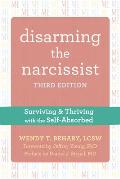
“disarming the narcissist” by Wendy T. Behary, LCSW

October 28, 2021 by Sonia Connolly 1 Comment

book cover

Subtitle: Surviving & Thriving with the Self-Absorbed

Wendy Behary specializes in psychotherapy for narcissists and their struggling family members. She can be firm and kind while not being overwhelmed by negative behaviors.

She suggests using “we” language (“Our common goals are…”), offering the benefit of the doubt (“I know you didn’t mean to be hurtful”), and still giving honest feedback (“and it’s hurtful when you interrupt and criticize me.”) If you want the narcissist to agree to something in a negotiation, preemptively give them credit for the idea.

She suggests: Plant seeds of more kind and considerate behavior by calmly mentioning what you expect many times and hoping it pays off years in the future. Offer a good example by being kind and considerate yourself. In my experience, narcissists aren’t paying attention, so the ongoing good example goes unnoticed or is taken for granted.

For the terrible self-doubt that narcissists’ oblivious certainty awakens, she suggests understanding your “schemas,” patterns and expectations from childhood. It gives a framework to recognize triggers, separate past from present, and offer gentle care for the hurt child within. She recommends understanding the schemas of the narcissist as well.

Wendy Behary collaborates with Jeffrey Young, who created Schema Therapy. His 18 schemas are:

  1. Abandonment/instability
  2. Mistrust/abuse
  3. Emotional deprivation – lack of nurturance, empathy, protection
  4. Defectiveness/shame
  5. Social isolation/alienation
  6. Dependence/incompetence
  7. Vulnerability to harm or illness
  8. Enmeshment/undeveloped self
  9. Failure
  10. Entitlement/grandiosity
  11. Insufficient self-control/self-discipline
  12. Subjugation of needs, emotions
  13. Self-sacrifice
  14. Approval-seeking/recognition-seeking
  15. Negativity/pessimism
  16. Emotional inhibition
  17. Unrelenting standards/hypercriticalness – perfectionism, rules and shoulds, preoccupation with time and efficiency
  18. Punitiveness

“Heal your childhood schemas. Don’t get triggered by the narcissist. Be sturdy and calm.” Sure, sounds great. Takes a little more than reading one book.

She often mentions seeing a therapist, but does not mention getting bodywork. There is a half-page section titled Somatic Experiencing that mentions body work and describes one Somatic Experiencing technique, without mentioning Peter Levine who originated that work.

She offers a mindfulness technique I liked: Feel your abdomen expand as you breathe in. On the next breath, feel your lungs expand. On the next breath feel the cool incoming air and warm outgoing air at your nostrils. Repeat. She adds paying attention to each of your senses as well.

She states several times during the book that if you are in danger, don’t try to reform the narcissist. Make a safety plan and work on getting out. The book is written for those who have decided to stay, at least for the moment, or are in the process of getting a divorce or co-parenting afterward.

She discusses hypersexual and perilous narcissists. The connection between what is usually called malignant narcissism and sexual acting out makes sense. However, the negative stereotypes about sex workers made this section hard to get through.

This is a thorough, knowledgeable book about how to live or work with a mild to moderate narcissist as an adult. It does not really address people who were raised by narcissists and can be emotionally difficult to read. Recommended if you need more tools to handle narcissists, and have already done enough healing to tolerate the slightly breezy tone about the healing process.

Available at bookshop.org.

Filed Under: nonfiction Tagged With: communication, psychology, relationship, trauma

“The Wood Wife” by Terri Windling

October 26, 2021 by Sonia Connolly Leave a Comment

book cover

Recommended to me by: Tor.com

I read this book many years ago, and remember being disappointed, because it wasn’t the kind of lyrical fantasy I was used to. Reading it again now that I’m older than the protagonist, I can see how skillfully relationships between the characters are portrayed. It’s beautifully written and lovingly portrays the Sonoran desert.

And it’s still not my type of book. It uses death and domestic violence as intensifiers, and the mystery is tied up neatly at the end, along with the characters’ lives. While I agree with the author’s message about the need to protect the natural world from endless cookie cutter suburban development, the lectures fall heavily from the characters’ mouths.

This book is part of a four-book series inspired by Brian Froud faery paintings. “Something Rich and Strange” by Patricia McKillip also had an author’s message that weighed heavily on the book. I’ve read the third book, “The Wild Wood” by Charles de Lint, but hadn’t heard of the fourth book from the series, “Hannah’s Garden” by Midori Snyder.

Available at bookshop.org.

Filed Under: fiction Tagged With: fantasy, fun, natural world, relationship

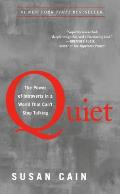
“Quiet” by Susan Cain

October 6, 2021 by Sonia Connolly Leave a Comment

book cover

Subtitle: The Power of Introverts in a World That Can’t Stop Talking

Recommended to me by: Leah K. Walsh

This is a carefully researched, well written, engaging book that says, “Introverts really are good enough!” Since I didn’t go in doubting that, I felt off-balance as I read, especially since I thought it would be a book about small business marketing for introverts.

From the summary at the end:

This book is about introversion as seen from a cultural point of view. Its primary concern is the age-old dichotomy between the “man of action” and the “man of contemplation,” and how we could improve the world if only there were a greater balance of power between the two types. It focuses on the person who recognizes him- or herself somewhere in the following constellation of attributes: reflective, cerebral, bookish, unassuming, sensitive, thoughtful, serious, contemplative, subtle, introspective, inner-directed, gentle, calm, modest, solitude-seeking, shy, risk-averse, thin-skinned. Quiet is also about this person’s opposite number: the “man of action” who is ebullient, expansive, sociable, gregarious, excitable, dominant, assertive, active, risk-taking, thick-skinned, outer-directed, light-hearted, bold, and comfortable in the spotlight.

The book starts with the story of Rosa Parks refusing to get off the bus, celebrating her for doing it in a quiet, unassuming way, without saying that racism required someone exactly like that for her role. It does come back to her story later and say that she was already trained in nonviolent resistance.

There are historical portraits of Eleanor Roosevelt, Dale Carnegie, and Steve Wozniak. Interviews with students at Harvard Business School where everything is done in groups, noting how influential the graduates are. Scientific studies involving tormenting monkeys to see the effects of a gene for processing serotonin. (No one seems to note the problems with animal research in books like this.) Other studies showing that group brainstorming is not as creative or innovative as people working alone, unless it’s done online. A longitudinal study showing that babies who are highly reactive tend to become introverted kids and adults.

There is a big emphasis on spouses and “mates.” It’s okay that the introverts were unpopular in high school, because of how happy they are with their mates and kids now. The vast majority are heterosexual. I vaguely remember mention of a gay couple, but it went by fast, in contrast with the extensive profiles of several heterosexual couples.

Gender roles are never overtly discussed, but it feels like this whole book is struggling with what it means to be a good valued person without having qualities traditionally valued in men (see the quote above about men of action).

If you feel defensive about being an introvert and care about the world of influential people, this might be the book for you.

Available at bookshop.org.

Filed Under: nonfiction Tagged With: business, neurodiversity, psychology

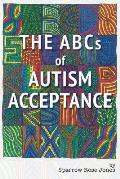
“The ABCs of Autism Acceptance” by Sparrow Rose Jones

September 19, 2021 by Sonia Connolly 1 Comment

book cover

Recommended to me by: AlexSeanchai

I thought the ABCs of autism acceptance would be the basic or elementary level of acceptance. Instead, this is a series of essays on topics starting with each letter of the alphabet: A for Acceptance, B for Bullying, C for (People of) Color, etc. Sparrow Rose Jones is autistic and shares some of their story through the essays.

They started the project out of rage against “autism awareness month” and the Autism Speaks organization, which ignores autistic adults and treats autistic children as a dreadful burden on their parents. Some of the essays carry that edge of fighting back against unacceptable treatment. The book advocates for acceptance, inclusion, and support, rather than awareness, othering, and neglect. “Presume competence, and provide support.” Autism is an intrinsic quality of a person, not something that can be peeled away to find the “normal” child or adult underneath.

Sparrow Rose Jones describes their own experience, and also reinforces that autistic people are not a monolith by including references to other autistic people’s viewpoints. In “E is for Empathy,” they strongly question the assumption that autistic people lack empathy, and also refer to Cynthia Kim’s essay The Empathy Conundrum where she discusses having an empathy deficiency. She distinguishes between not being able to sense someone’s emotions, while still having sympathy for their distress when she perceives it. Autistic people deserve acceptance and support whether or not they can intuit others’ emotions.

From the conclusion:

We have explored some serious and often intense topics. Autism acceptance is about seeing the beauty and living the joy of autism, but there are some very difficult aspects to the Autistic life – some inherent and many imposed on us from outside. Autism acceptance includes understanding our struggles and being compassionate toward us as we seek a better life for ourselves and others.

Highly recommended to learn about one person’s experience of being autistic and an overview of others’ experiences, including statistics about poverty, unemployment, victimization, etc.

Note: The author is now known as Maxfield Sparrow. Website: Unstrange Mind.

Available at bookshop.org.

Filed Under: nonfiction Tagged With: disability, memoir, neurodiversity, psychology

“Pahua and the Soul Stealer” by Lori M. Lee

September 19, 2021 by Sonia Connolly Leave a Comment

book cover

Recommended to me by: Marissa Lingen

A delightful adventure story based on Hmong legends and spirituality with two eleven-year-old Hmong girls as the heroes, Pahua and Zhong. Pahua can see all spirits, which is unusual even for shamans (does the Hmong culture use the word shaman?) and has a companion spirit in the shape of a black kitten, named Miv, which means cat. Zhong is on assignment from her shaman school. There are battles, but no lives tossed away casually. Compassion and successful negotiation get them further than fighting.

The glossary at the end includes pronunciation of Hmong terms used in the story, and the afterword shares Lori Lee’s history as a Hmong refugee who resettled in the US and struggled to fit in, as Pahua does.

Highly recommended.

Available at bookshop.org.

Filed Under: fiction Tagged With: anti-racism, childrens, fun

“You Can Do All Things” by Kate Allan

September 16, 2021 by Sonia Connolly Leave a Comment

book cover

Subtitle: Drawings, Affirmations, and Mindfulness to Help with Anxiety and Depression

Recommended to me by: The Latest Kate tweet

I liked the image of the little hedgehog lying in autumn leaves saying, “Please try to be on your own side today,” so much that I immediately looked into Kate Allan’s books.

This is a small book, six inches square. Each chapter has brief interludes of text about the author’s experiences of anxiety and depression, followed by a generous number of pages starring a whimsical cute animal saying something encouraging. The chapter ends with three brief tools or coping mechanisms, like “Focus ONLY on what needs to be done TODAY,” followed by a few more encouraging animals.

I was doubtful about some of the sayings, like, “It’s all going to work out fine.” Err, maybe? The book is copyright 2018, so it doesn’t take a long-running global pandemic into account. Some hit closer to home, like the white silhouette of a cat with its back turned, saying, “Being lonely doesn’t mean you’re unloved.”

Some of the animals are fanciful or realistic cats and dogs. Some are mythical, like dragons or unicorns or a mix of different creatures. There is the occasional seasonal tree. There is only one drawing of a person, a young Black woman in a bathing suit saying, “There is no one I need to change for except myself.” In the author photo, Kate Allan appears to be white. I wish an editor had mentioned to her that it’s questionable to include a sole Black woman among images of animals, even if it’s well-meant.

From the introduction,

This is a guide I wrote to younger Kate, the person who hated herself and had no idea how to cope with what troubled her. I’ve included every strategy, affirmation, and coping skill that has gotten me through hard times, from slight worries about how well I’m doing, to incessant suicidal ideation.

Recommended if your brain lies to you regularly (depression or anxiety) and you don’t already know how to cope with that, and you don’t mind that the book assumes all your problems are internal rather than some of them being external, like a pandemic or systemic racism or runaway capitalism or all those at once.

Available at bookshop.org.

Filed Under: art Tagged With: illustrated, psychology, survival story

  • « Go to Previous Page
  • Page 1
  • Interim pages omitted …
  • Page 12
  • Page 13
  • Page 14
  • Page 15
  • Page 16
  • Interim pages omitted …
  • Page 72
  • Go to Next Page »

Primary Sidebar

Recent Books

  • “Untangling” by Barbara McGavin and Ann Weiser Cornell
  • “After Hours at Dooryard Books” by Cat Sebastian
  • “We Belong to the Drum” by Sandra Lamouche and Azby Whitecalf
  • “Atlas of the Heart” by Brene Brown
  • “Life After Cars” by Sarah Goodyear, Doug Gordon, Aaron Naparstek
  • “Tidy First?” by Kent Beck
  • “When You Had Power” and “You Knew the Price” by Susan Kaye Quinn
  • “Taproot” by Keezy Young
  • “The Tower at Stony Wood” by Patricia A McKillip
  • “Hospicing Modernity” by Vanessa Machado de Oliveira

Tags

activism aging anti-racism bodywork business childhood abuse childrens CivicTech communication disability domestic violence fantasy feminism finance Focusing food fun healing health at any size illustrated Judaism leadership lgbt marketing memoir music natural world neurodiversity politics psychology relationship romance science science fiction software spirituality survival story trauma writing young adult

Categories

Archives

Please note: bookshop.org and Amazon links are affiliate links. Copyright © 2026 · Genesis Sample on · WordPress